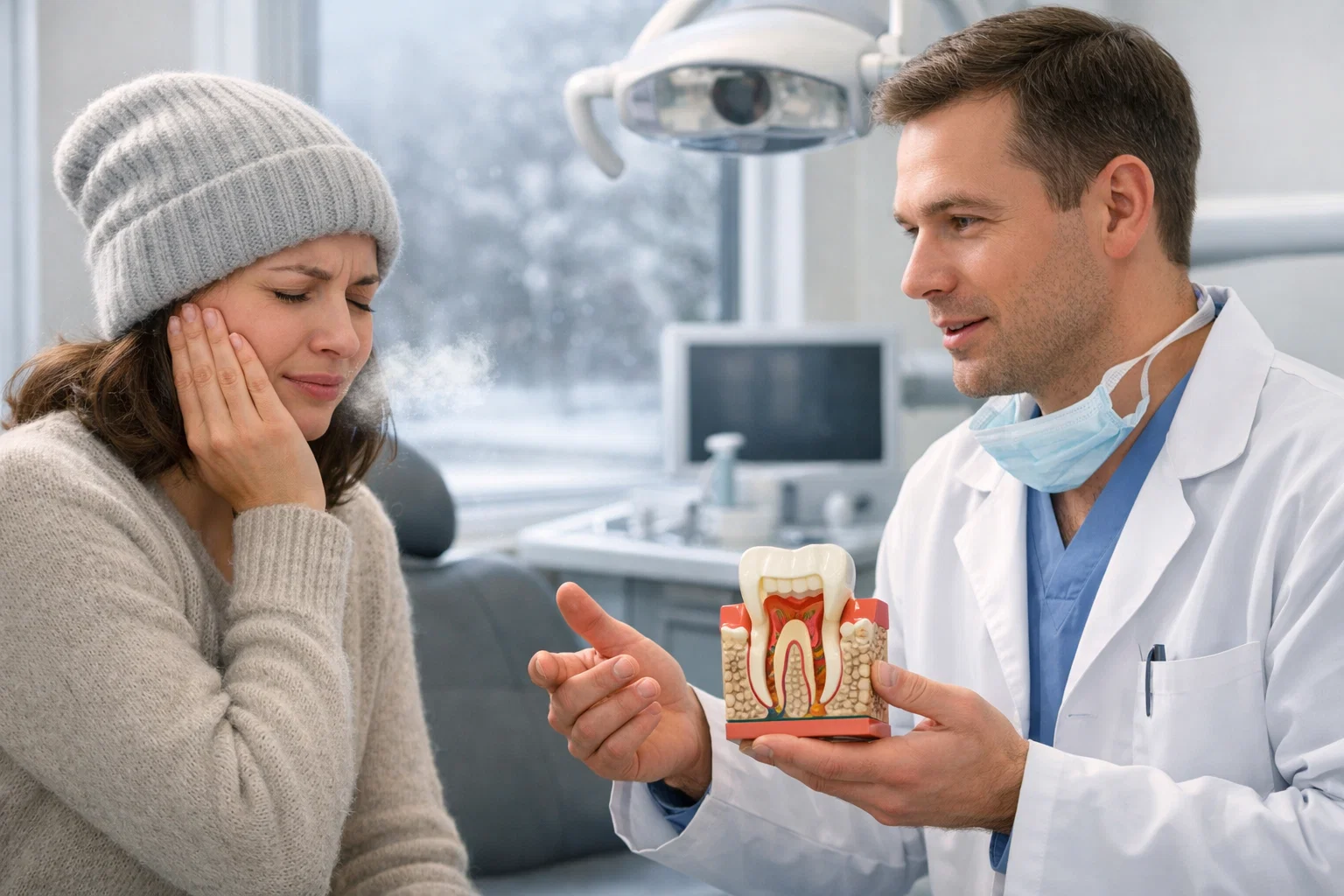
Teeth sensitivity in winter happens because cold air causes teeth to expand and contract, exposing sensitive nerves. Dry mouth, weakened enamel, and gum recession worsen the problem. Proper oral care, desensitizing treatments, and preventive dental habits can significantly reduce winter-related tooth sensitivity.
Key Takeaways
- Cold air and temperature changes are the main triggers of winter teeth sensitivity
- Dry mouth in winter increases enamel vulnerability
- Gum recession exposes sensitive tooth roots
- Desensitizing toothpaste helps block nerve pain
- Professional dental care offers long-term relief
What Is Teeth Sensitivity in Winter?
Teeth sensitivity in winter refers to sharp, sudden pain when teeth are exposed to cold air, cold drinks, or temperature changes. This discomfort usually occurs when the protective enamel weakens, allowing external stimuli to reach the tooth’s nerves.
Winter teeth sensitivity is especially common in people with existing enamel wear, gum recession, or untreated dental issues.
Why Winter Makes Your Teeth More Sensitive
Cold Air Triggers Nerve Response
Cold weather causes teeth to rapidly contract, which can stress enamel and expose microscopic cracks. When cold air hits these areas, nerves react instantly, leading to pain.
Dry Mouth Reduces Natural Protection
Indoor heating and reduced water intake can cause dry mouth. Saliva protects enamel and neutralizes acids—less saliva means higher risk of sensitive teeth in cold weather.
Gum Recession Exposes Tooth Roots
Cold weather can worsen gum inflammation, leading to recession. Exposed roots lack enamel, making them extremely sensitive to cold temperatures.
Common Symptoms of Winter Teeth Sensitivity
- Sharp pain when breathing cold air
- Discomfort while drinking cold beverages
- Tingling or aching during temperature changes
- Sensitivity while brushing
These symptoms often indicate weakened enamel or underlying dental issues that should not be ignored.
How to Prevent Teeth Sensitivity in Winter
Use a Desensitizing Toothpaste
Specialized toothpaste helps block nerve signals and strengthens enamel over time.
Avoid Over-Brushing
Aggressive brushing wears down enamel. Use a soft-bristled toothbrush and gentle strokes.
Stay Hydrated
Drinking enough water prevents dry mouth and supports natural enamel protection.
Info Box
Switching to a fluoride-rich, desensitizing toothpaste can show noticeable improvement in winter teeth sensitivity within 2–4 weeks of consistent use.
Effective Tooth Sensitivity Remedies
Professional fluoride applications strengthen enamel and reduce nerve exposure.
Dental Sealants
Sealants cover exposed areas, offering long-term protection against cold sensitivity.
Treat Gum Problems Early
Addressing gum disease or recession prevents worsening sensitivity.
Alert Box ⚠️
Ignoring sensitive teeth in cold weather can lead to cracks, decay, or nerve damage that may require root canal treatment later.
Cold Weather Dental Care Tips
- Cover your mouth with a scarf in extreme cold
- Avoid very hot-to-cold food transitions
- Maintain regular dental checkups
- Limit acidic foods during winter months
Proper cold weather dental care helps prevent long-term enamel damage and recurring sensitivity.
When to See a Dentist for Winter Teeth Sensitivity
If sensitivity lasts more than a few weeks or worsens, it may indicate cavities, enamel erosion, or gum disease. Professional diagnosis ensures the right treatment before complications arise.
Unexpected Connection: Protection Is Key to Preventing Sensitivity
Just as teeth need protection from environmental stress, daily exposure to cold air, acidic foods, and improper oral care can weaken enamel over time. Protecting teeth with preventive dental treatments helps reduce sensitivity and maintains long-term oral health, especially during winter.
Professional Dental Care for Winter Teeth Sensitivity
Winter teeth sensitivity does not always improve with home remedies alone. If pain persists, occurs frequently with cold air or drinks, or is linked to gum problems, professional dental care becomes essential for long-term relief.
Accurate Diagnosis Makes the Difference
Every case of teeth sensitivity in winter has a different cause, such as enamel erosion, gum recession, cavities, or exposed tooth nerves. A proper dental examination is necessary to identify the root cause and provide the right treatment.
Effective Treatments for Sensitive Teeth
At Dr. M’s Dental Care, patients receive personalized treatment plans for winter teeth sensitivity, which may include:
- Desensitizing dental treatments
- Professional fluoride applications
- Scaling and polishing
- Gum care and preventive therapies
Trusted Cold Weather Dental Care
The expert team at docmdentalcare.com focuses on long-term solutions, not just temporary relief. Their cold weather dental care services help protect teeth, reduce sensitivity, and prevent future dental problems beyond the winter season.
Success Box ✅
Early professional treatment can significantly reduce winter teeth sensitivity and help prevent serious dental issues in the future..
Experiencing Teeth Sensitivity This Winter?
If cold weather is making your teeth painful or sensitive, don’t ignore it. Early diagnosis can prevent serious dental issues and long-term discomfort.
Visit Dr. M’s Dental Care in DHA Phase 8, Karachi for expert evaluation, professional desensitizing treatments, and complete winter dental care.
Book Your Appointment TodayCold temperatures cause teeth to contract, stressing enamel and exposing nerves. Reduced saliva and dry air also contribute, making sensitive teeth in cold weather more noticeable.
Winter teeth sensitivity is usually temporary but can become chronic if enamel damage or gum recession is untreated. Early preventive care helps avoid long-term issues.
Staying hydrated, avoiding acidic foods, using soft brushing techniques, and protecting your mouth from cold air can naturally reduce winter teeth sensitivity.
Desensitizing toothpaste containing potassium nitrate or fluoride works best for teeth sensitivity in winter by blocking nerve signals and strengthening enamel.
Yes, gum recession exposes tooth roots, which lack enamel. This makes teeth extremely sensitive to cold air and beverages during winter.
If sensitivity lasts longer than two weeks or occurs without cold exposure, consult a dentist to rule out cavities, cracks, or gum disease.
Cold air itself doesn’t damage teeth permanently, but repeated exposure combined with weak enamel can worsen sensitivity over time.