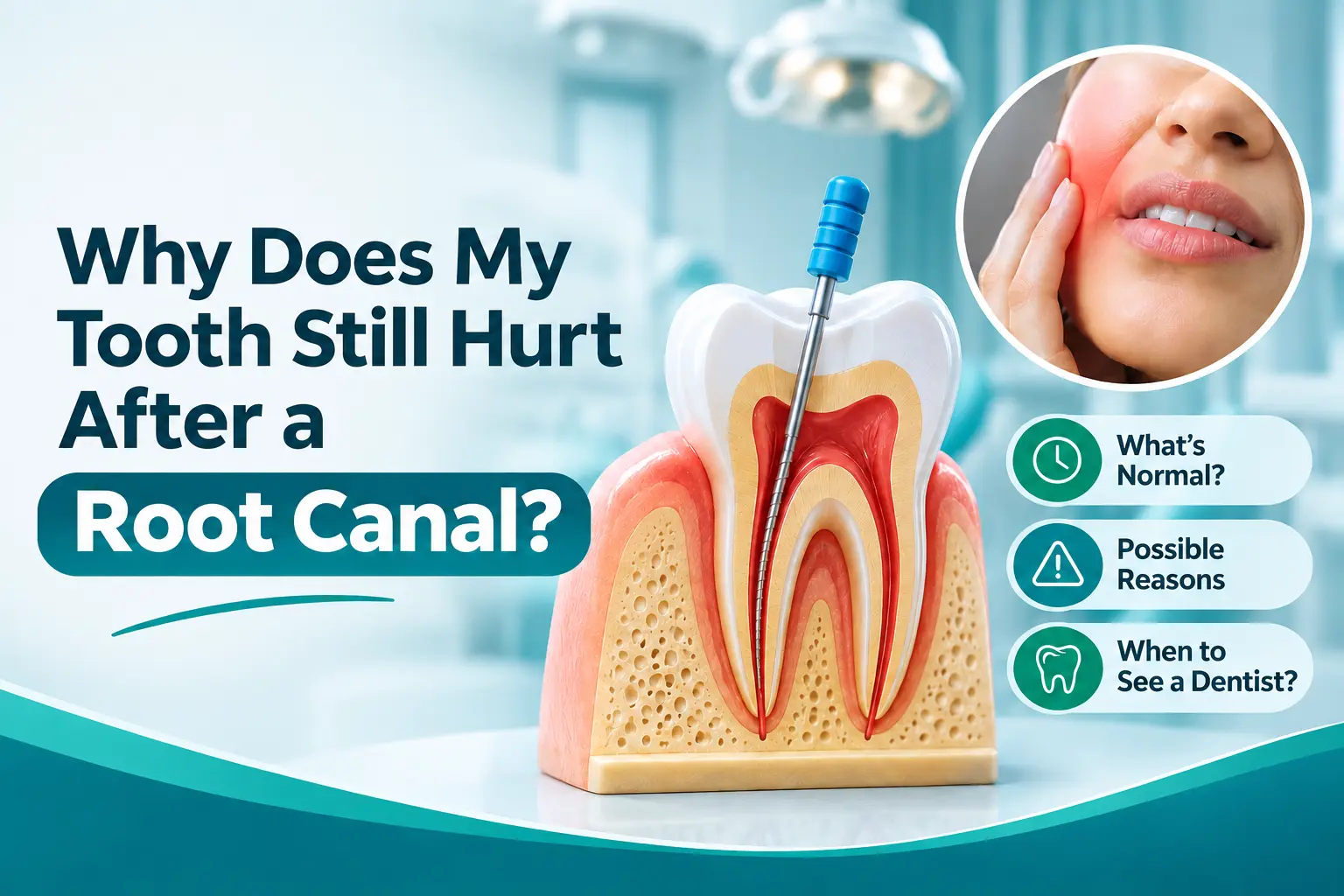
Tooth pain after root canal treatment can happen because the tissues surrounding the treated tooth need time to heal. Mild tenderness or sensitivity for a few days is generally expected. However, severe, worsening or persistent pain may indicate a bite problem, infection, a crack or incomplete healing that needs dental evaluation.
Key Takeaways
- Mild soreness after a root canal is common during the initial healing period.
- Pain should generally improve rather than become progressively worse.
- Pain when biting may be related to inflammation or an uneven bite.
- Persistent pain, swelling or returning symptoms should be assessed by a dentist.
- Some previously treated teeth may need additional treatment, including root canal retreatment.
- Avoid chewing hard foods on the treated tooth until your dentist confirms it has been properly restored.
Is Tooth Pain After Root Canal Treatment Normal?
Yes, mild tooth pain after root canal treatment can be normal, particularly during the first few days. Although the infected pulp inside the tooth is removed, the surrounding tissues can remain irritated and require time to recover.
You may notice:
- Mild tenderness around the treated tooth.
- Discomfort when chewing or applying pressure.
- Slight soreness in the surrounding gum area.
- Temporary sensitivity when touching the treated area.
This discomfort should gradually improve. According to the American Association of Endodontists (AAE), some tenderness after treatment is expected, but severe pain or pressure lasting more than a few days should be reported to your dental professional.
Important: Pain that becomes stronger, returns after improving or occurs with visible swelling should not be ignored.
Why Does My Tooth Still Hurt After a Root Canal?
There are several possible reasons why a tooth may continue to hurt after root canal treatment. The exact cause can only be identified through a dental examination.
1. Inflammation Around the Tooth
Even after infected pulp has been removed, the tissues surrounding the root may remain inflamed. This can cause tenderness, particularly when you bite down or touch the tooth.
This type of discomfort often settles as the surrounding area heals.
2. Your Bite May Need Adjustment
Sometimes, a temporary or permanent filling or crown sits slightly higher than the surrounding teeth. This can cause the treated tooth to receive excessive pressure whenever you close your mouth or chew.
You may notice:
- Pain when biting down.
- A feeling that the treated tooth touches first.
- Discomfort while chewing food.
A dentist can check your bite and determine whether an adjustment is needed.
3. Infection May Remain or Return
In some cases, infection may persist or develop again after treatment. This can happen when a complex root canal system has not been fully treated or when bacteria enter the tooth again.
Possible warning signs include:
- Increasing or throbbing pain.
- Swelling around the gum or face.
- A recurring unpleasant taste or discharge.
- Symptoms returning after an initial improvement.
An examination is important to identify whether an infection is present and what treatment is appropriate.
4. An Undetected Crack in the Tooth
A crack in the treated tooth can cause discomfort during chewing. Some cracks are difficult to identify without a detailed dental assessment.
Pain may become noticeable when biting or releasing pressure. Depending on the location and severity of the crack, treatment options can vary.
5. Delayed or Damaged Permanent Restoration
After root canal treatment, a tooth may require a permanent filling or crown to protect its remaining structure.
If the final restoration is delayed, damaged or does not seal the tooth properly, bacteria may enter again. An unrestored tooth may also be more vulnerable to fracture.
The AAE’s post-treatment guidance explains why patients should arrange their recommended final restoration and avoid heavy chewing on the treated tooth until it is protected.
6. The Tooth Has Not Healed as Expected
Sometimes, a tooth does not heal properly after the initial procedure. A previously treated tooth can also develop new problems months or even years later.
The American Association of Endodontists explains that missed canals, complex root anatomy, delayed restorations and leakage can contribute to problems after treatment.
A dentist or endodontist can assess whether additional treatment is necessary.
How Long Does Pain Last After a Root Canal?
Most patients experience mild discomfort for a few days after treatment. Some tenderness may continue while the surrounding tissues recover, but the overall trend should be towards improvement.
The NHS guide to root canal treatment explains that soreness and swelling around the tooth should improve during recovery.
Here is a general guide:
| Recovery stage | What you may experience |
|---|---|
| First 24 hours | Numbness wearing off and mild tenderness |
| First few days | Some soreness or sensitivity when chewing |
| Following days | Discomfort should gradually improve |
| Persistent or worsening symptoms | Dental assessment is recommended |
Recovery varies depending on the tooth, the severity of the original infection and the complexity of treatment.
If pain is not improving, becomes severe or returns after a period of relief, contact your dentist rather than waiting indefinitely.
Tooth Pain When Biting After Root Canal
Pain when biting after a root canal can have several causes. The surrounding tissues may still be inflamed, or the treated tooth may be receiving too much pressure because its bite needs adjustment.
Other possible causes include a crack, a problem with the restoration or an infection that requires further investigation.
Do not repeatedly bite down to test the tooth. Instead:
- Avoid hard or crunchy foods on the treated side.
- Follow the aftercare instructions given by your dentist.
- Arrange a bite assessment if the tooth feels higher than the others.
- Seek dental advice if the discomfort persists or increases.
A dentist may examine your bite, restoration and surrounding tissues to identify the source of discomfort.
Severe Pain or Swelling After Root Canal Treatment: When Should You Worry?
Mild tenderness is different from severe or increasing pain. Certain symptoms need prompt professional attention.
Contact Your Dentist If You Experience:
- Severe pain or pressure that lasts more than a few days.
- Visible swelling inside or outside your mouth.
- Pain that becomes worse instead of improving.
- A bite that feels uneven.
- A temporary filling or crown that comes out.
- Symptoms that were present before treatment returning.
These warning signs are also highlighted in the AAE’s post-treatment care guidance.
Emergency warning: If you develop rapidly spreading facial or neck swelling, difficulty breathing or difficulty swallowing, seek emergency medical care immediately.
What to Do If a Tooth Hurts After a Root Canal
If you are experiencing pain after root canal therapy, taking appropriate care of the treated tooth can help protect it while it heals.
1. Follow Your Dentist’s Instructions
Take prescribed or recommended medication only as directed by your dentist. Do not increase doses or combine medicines without checking their safety.
2. Avoid Hard Foods
Choose softer foods if chewing causes discomfort. Avoid biting hard foods directly with the treated tooth until your dentist confirms it is safe.
3. Maintain Gentle Oral Hygiene
Continue brushing and flossing unless your dentist advises otherwise. Clean the area gently to maintain good oral hygiene.
4. Attend Follow-Up Appointments
Follow-up visits allow your dentist to assess healing and confirm that the tooth has received the necessary permanent restoration.
5. Do Not Ignore Returning Pain
If discomfort returns after initially improving, arrange a dental examination. Persistent symptoms may need further investigation.
For more information about the procedure and recovery, you can also read the Cleveland Clinic’s root canal treatment guide.
How Is the Cause of Root Canal Pain Diagnosed?
A dentist needs to identify the source of pain before recommending treatment. The assessment may include:
Clinical Examination
The dentist checks the treated tooth, surrounding gums and nearby teeth for signs of inflammation, swelling, damage or infection.
Bite Assessment
If pain occurs while chewing, the dentist may check whether the restoration is affecting how your teeth come together.
Dental X-rays
X-rays can help assess the root area, surrounding bone and the condition of the previous root canal treatment. Additional imaging may be considered when clinically necessary.
Review of Previous Treatment
The dentist may review the previous procedure, the type of restoration and the time when symptoms began.
The appropriate next step depends on the examination findings rather than symptoms alone.
Can a Failed Root Canal Be Treated Again?
Yes, some teeth that have not healed properly after an initial root canal may be treated again. This is known as endodontic retreatment.
During retreatment, the dentist or endodontist may reopen the tooth, remove the previous root filling material, clean the canals again and seal them.
Other treatment options may be considered depending on the tooth’s condition. These can include endodontic surgery or, when the tooth cannot be restored, extraction.
The AAE’s guide to endodontic retreatment explains why some previously treated teeth develop new problems and how further treatment may help.
Not every painful root canal has failed. A proper examination is necessary before deciding whether retreatment is required.
Root Canal Treatment and Dental Care at Dr. M’s Dental Care, Karachi
If you are experiencing tooth pain after a root canal, a professional dental assessment can help identify the reason and determine the next step.
Dr. M’s Dental Care is a dental clinic in DHA Phase 8, Karachi, offering general, restorative and specialist dental services, including root canal treatment and crowns and bridges.
The clinic’s profile identifies Dr. Syed Masood ul Hasan as a restorative dentistry specialist and medical educationist with nearly 15 years of experience.
If you are experiencing persistent discomfort, pain while chewing or swelling after a root canal, you can contact Dr. M’s Dental Care to arrange an assessment.
A dentist can examine the treated tooth, review its condition and discuss suitable treatment options.
Your Smile Deserves Expert Care.
Take the first step towards better dental health. Schedule your appointment with Dr. Masood today.
BOOK YOUR APPOINTMENT →Personalised Dental Care · DHA Phase 8, Karachi
Final Thoughts
Tooth pain after root canal treatment does not automatically mean the procedure has failed. Mild soreness can be part of normal recovery, but persistent, severe or returning pain deserves professional attention.
Avoid putting unnecessary pressure on the treated tooth and attend your recommended follow-up appointments. If symptoms are getting worse, arrange a dental examination to identify the cause and protect your oral health.
Frequently Asked Questions
Mild tenderness or sensitivity for a few days can be normal as the surrounding tissues heal. However, severe, worsening or persistent pain should be checked by a dentist to rule out complications.
Many patients experience mild discomfort for a few days, with symptoms gradually improving. Recovery varies between individuals. Pain that continues without improvement or becomes worse should be assessed by a dental professional.
Pain while biting may be caused by inflammation around the root, an uneven bite, a crack or a restoration problem. A dentist can examine the tooth and determine the actual cause.
Pain months after treatment may be related to incomplete healing, a missed canal, a crack or leakage around the restoration. An examination by a dentist or endodontist can help determine whether further treatment is needed.
Some teeth that have not healed properly can be treated with endodontic retreatment or other procedures. The suitable option depends on the tooth’s condition, remaining structure and the reason for the previous treatment problem.
Seek dental advice if you experience severe pain, visible swelling, an uneven bite, a lost temporary restoration or symptoms that return after improving. Difficulty breathing or swallowing with facial or neck swelling requires emergency care.