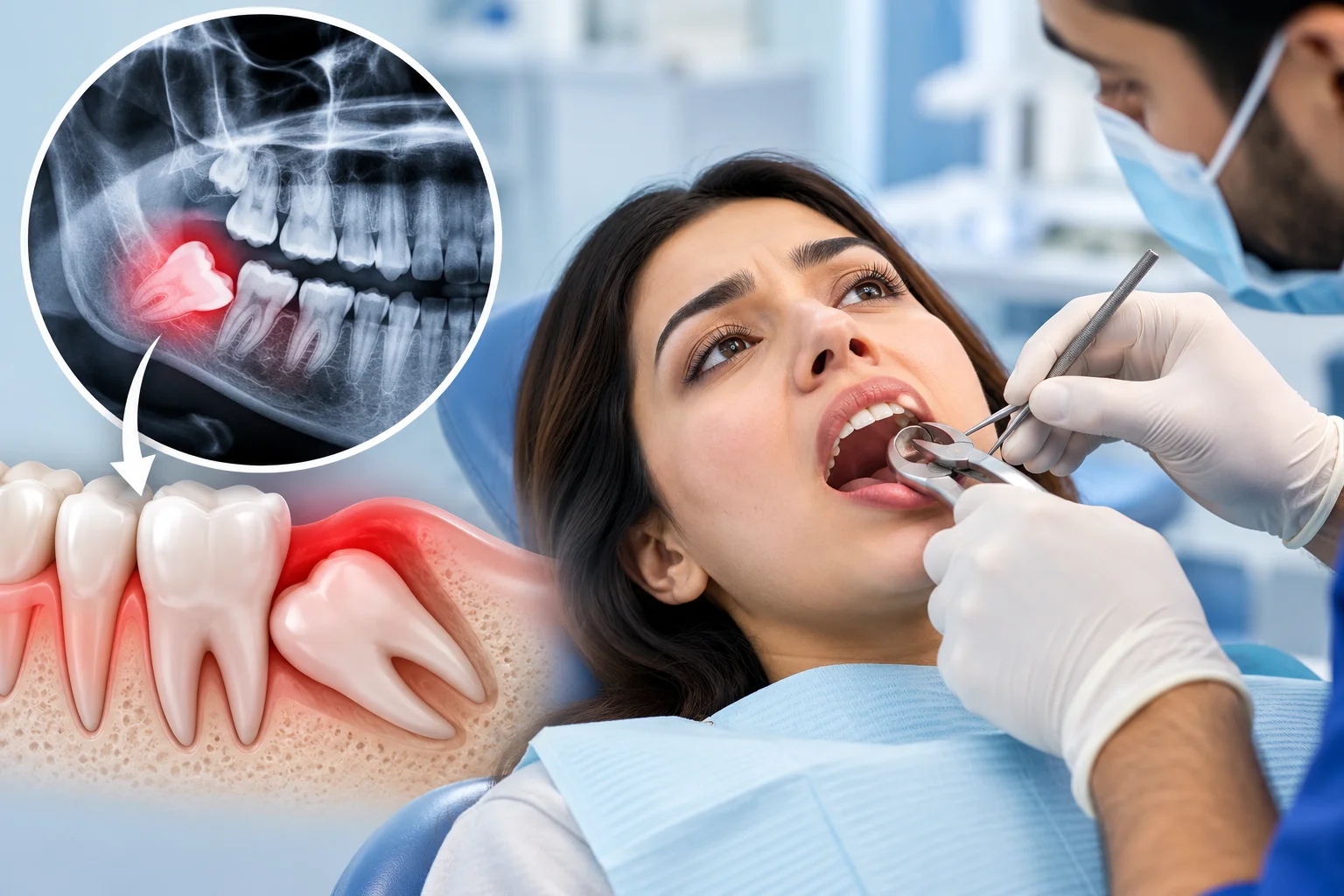
Wisdom tooth removal is recommended when a wisdom tooth causes pain, infection, swelling, crowding, or becomes impacted. Best Wisdom Tooth Removal in Karachi involves proper dental examination, X-rays, suitable anesthesia, safe extraction, and appropriate aftercare to support a comfortable recovery and reduce complications.
Key Takeaways
- Wisdom teeth usually emerge during the late teens or early twenties.
- An impacted wisdom tooth may require surgical removal.
- Pain, swelling, infection, or difficulty opening the mouth can indicate a problem.
- A dental X-ray helps determine the position and condition of the wisdom tooth.
- Wisdom tooth removal cost in Karachi depends on the complexity of the extraction.
- Recovery is usually easier when proper aftercare instructions are followed.
- Not every wisdom tooth needs to be removed; a dentist should assess the tooth first.
What Is Wisdom Tooth Removal?
Wisdom tooth removal is a dental procedure used to extract one or more third molars when they are causing problems or are likely to create future complications. Wisdom teeth are the last permanent teeth to develop and commonly appear between the late teenage years and early adulthood.
Some wisdom teeth grow normally and do not require treatment. Others may not have enough space to erupt properly, becoming partially or completely trapped beneath the gum or bone.
What Is an Impacted Wisdom Tooth?
An impacted wisdom tooth is a tooth that cannot fully emerge into the mouth because of limited space, an abnormal angle, or obstruction from surrounding teeth or bone.
Impaction can occur with both upper and lower wisdom teeth, although lower wisdom teeth commonly present more complex extraction challenges.
When Does a Wisdom Tooth Need Removal?
A dentist may recommend removal when a wisdom tooth causes:
- Persistent wisdom tooth pain
- Repeated infection
- Gum swelling or inflammation
- Tooth decay
- Damage to neighboring teeth
- Cysts or other dental complications
- Difficulty maintaining proper oral hygiene around the tooth
Do All Wisdom Teeth Need to Be Removed?
No. A healthy wisdom tooth that has erupted properly, can be cleaned effectively, and is not causing problems may not need immediate removal.
The decision should be based on a dental examination and appropriate imaging rather than simply because the tooth is a wisdom tooth.
Important: Do not attempt to diagnose an impacted or infected wisdom tooth yourself. A dental examination and X-ray can help determine whether removal is actually necessary.
Common Signs You May Need Wisdom Tooth Removal
Wisdom tooth problems can develop gradually or appear suddenly. Recognizing the symptoms can help you seek dental care before the condition becomes more complicated.
Wisdom Tooth Pain
Pain around the back of the jaw is one of the most common reasons people seek treatment. The discomfort may occur when the tooth is erupting, impacted, infected, or putting pressure on nearby structures.
A painful wisdom tooth should not automatically be ignored simply because the pain temporarily disappears.
Wisdom Tooth Swelling and Infection
Swelling around the gums can occur when bacteria become trapped around a partially erupted tooth. This may lead to inflammation, bad breath, an unpleasant taste, or difficulty chewing.
Repeated episodes of swelling can indicate that the wisdom tooth requires professional assessment.
Difficulty Opening the Mouth
More severe wisdom tooth problems can cause discomfort while opening the mouth or chewing. If swelling becomes significant or is accompanied by fever or difficulty swallowing, prompt dental attention is important.
Wisdom Tooth Removal Procedure: What to Expect
The exact wisdom tooth removal procedure depends on the tooth’s position, condition, and level of impaction.
Dental Examination and Wisdom Tooth X-Ray
Before extraction, the dentist examines the tooth and surrounding gums. A wisdom tooth X-ray can show the tooth’s position, roots, surrounding bone, and relationship with nearby structures. An OPG X-ray can provide a wider view of the teeth, jawbone, and surrounding structures, helping dentists assess impacted wisdom teeth and plan surgical treatment
This information helps the dentist determine the safest approach.
Wisdom Tooth Anesthesia
Local anesthesia is commonly used to numb the area before extraction. The type of anesthesia and overall approach can vary depending on the complexity of the procedure and the patient’s circumstances.
The goal is to keep the procedure as comfortable as possible.
Simple vs Surgical Wisdom Tooth Extraction
A fully erupted wisdom tooth may sometimes be removed through a relatively straightforward extraction.
An impacted tooth may require surgical wisdom tooth extraction, where the dentist or oral surgeon accesses the tooth through the gum and, when necessary, removes surrounding bone or divides the tooth into sections.
Wisdom Tooth Removal Cost in Karachi
The wisdom tooth removal cost in Karachi varies from patient to patient. There is no single price that applies to every extraction because the complexity of the procedure can be significantly different.
What Affects Wisdom Tooth Extraction Cost?
Several factors can influence the final cost, including:
- Whether the tooth is fully erupted or impacted
- Upper or lower wisdom tooth
- Complexity of the roots
- Need for surgical extraction
- Required X-rays or imaging
- Type of anesthesia
- Dentist or oral surgeon’s expertise
- Follow-up treatment and medication
Simple vs Surgical Extraction Cost
A simple extraction is generally less complex than surgical removal of an impacted tooth. Therefore, impacted wisdom tooth removal cost can be higher when additional surgical steps are required.
For an accurate estimate, patients should have the tooth examined before making a treatment decision.
Why Should You Avoid Choosing Only by Price?
The cheapest treatment is not necessarily the safest or most appropriate treatment. Wisdom teeth can be positioned close to nerves, neighboring teeth, and other anatomical structures.
Choosing an experienced wisdom tooth dentist in Karachi can help ensure that the tooth is properly assessed and the appropriate treatment approach is selected.
Wisdom Tooth Extraction Recovery
Recovery depends on the complexity of the extraction and the individual’s healing process. Simple extractions may have a shorter recovery period, while surgical removal of an impacted tooth can require more time.
First Few Days After Extraction
Mild pain, swelling, and tenderness can be expected after wisdom tooth extraction. Following the dentist’s instructions carefully can help manage these symptoms.
Avoid disturbing the extraction site and maintain good oral hygiene according to the instructions provided by your dental professional.
What to Eat After Wisdom Tooth Extraction
Soft foods are generally easier to manage during the initial recovery period. Depending on your dentist’s advice, suitable options may include:
- Yogurt
- Mashed foods
- Soft eggs
- Smooth soups that are not too hot
- Soft rice or similar easy-to-chew foods
Avoid foods that can easily get trapped in the extraction area, especially during the early healing period.
How to Reduce Swelling After Wisdom Tooth Removal
Swelling can be managed by following the aftercare instructions provided by your dentist. Cold compresses may be recommended during the initial period, while prescribed or recommended medication should be taken according to professional instructions.
Avoid unnecessary pressure or irritation around the extraction site.
Recovery Tip: Do not rush back to normal eating or strenuous activity immediately after surgical extraction. Give your body time to heal and follow your dentist’s specific instructions.
Wisdom Tooth Extraction Aftercare
Maintaining good oral hygiene is also important during recovery. Once your dentist allows normal cleaning around the treated area, professional teeth cleaning in Karachi can support overall oral hygiene and gum health.
Your dentist may advise you to:
- Keep the extraction area clean as instructed.
- Avoid smoking during the healing period.
- Follow medication instructions carefully.
- Choose appropriate soft foods initially.
- Avoid disturbing the extraction site.
- Attend any recommended follow-up appointment.
If you experience worsening pain, significant swelling, persistent bleeding, fever, or other concerning symptoms, contact your dental professional.
What Are the Possible Wisdom Tooth Extraction Complications?
Most extractions are performed routinely, but complications can occur, particularly with complex or impacted teeth.
Possible complications can include infection, prolonged bleeding, dry socket, swelling, or discomfort. The risk can vary depending on the tooth’s position and the complexity of the extraction.
A professional assessment before treatment helps identify potential risks and determine an appropriate approach.
When Should You See a Dentist for Wisdom Tooth Pain?
You should arrange a dental examination if wisdom tooth pain continues, repeatedly returns, or is accompanied by swelling, infection, difficulty opening your mouth, or problems chewing.
Seeking treatment early can help identify the underlying cause and prevent a minor problem from becoming more complicated.
Why Choose Dr. M’s Dental Care for Wisdom Tooth Treatment?
If you’re searching for Best Wisdom Tooth Removal in Karachi, choosing a dental clinic that focuses on proper diagnosis and patient-specific treatment is important.
You can also explore our dental services in Karachi to learn more about the treatments available at Dr. M’s Dental Care.
Dr. M’s Dental Care can assess your wisdom tooth condition, determine whether extraction is necessary, and recommend an appropriate treatment approach based on your dental examination and imaging.
Rather than assuming every wisdom tooth needs removal, the focus should be on identifying the actual problem, evaluating the tooth’s position, and selecting the safest suitable treatment.
Final Thoughts
Wisdom tooth problems can range from mild discomfort to painful infection and complex impaction. Professional evaluation is important to determine whether removal is necessary and what type of extraction is appropriate.
If you are experiencing persistent pain, swelling, infection, or other wisdom tooth symptoms, consult a qualified dental professional for an examination. For patients looking for Best Wisdom Tooth Removal in Karachi, an accurate diagnosis, appropriate treatment planning, and proper aftercare are key parts of a successful experience.
Frequently Asked Questions
Wisdom tooth removal is performed using anesthesia to numb the treatment area, so patients generally should not feel sharp pain during the procedure. Some soreness, swelling, or discomfort may occur afterward, particularly following surgical extraction of an impacted tooth.
Wisdom tooth removal cost in Karachi varies depending on whether the tooth is fully erupted, impacted, or requires surgical extraction. X-rays, anesthesia, tooth position, and procedure complexity can also affect the final treatment cost.
The duration depends on the tooth’s position and extraction complexity. A straightforward extraction may be relatively quick, while surgical removal of an impacted wisdom tooth can take longer. Your dentist can provide a more accurate estimate after examining the tooth.
Initial healing typically takes several days, while complete healing of the extraction area can take longer. Recovery varies depending on whether the extraction was simple or surgical and how well aftercare instructions are followed.
A wisdom tooth may need removal when it causes recurring pain, infection, swelling, decay, damage to neighboring teeth, or other complications. An impacted tooth should be evaluated by a dentist to determine whether removal is appropriate.
Soft foods are generally easier to eat immediately after extraction. Yogurt, mashed foods, soft eggs, and appropriately prepared soups can be suitable options. Your dentist may provide specific dietary instructions based on the procedure and your recovery.
An impacted wisdom tooth can sometimes remain without causing immediate problems, but it may increase the risk of infection, decay, gum problems, or damage to nearby teeth. A dentist can assess its position and determine whether monitoring or removal is appropriate.