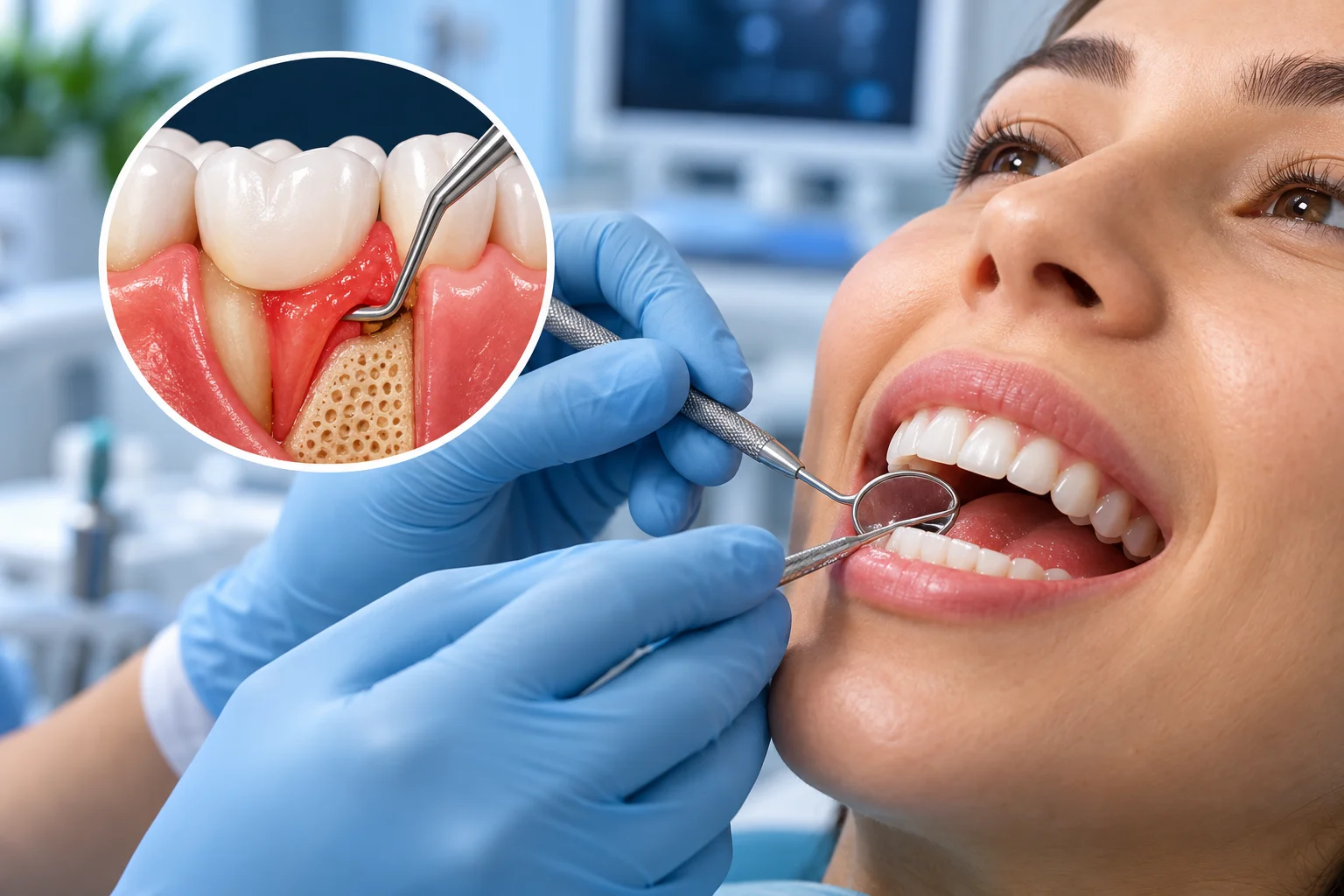
If you are experiencing bleeding, swollen or receding gums, gum surgery may be recommended when gum disease has progressed beyond what routine cleaning can manage. Best Gum Surgery in Karachi depends on the condition of your gums, bone support, treatment needs, and evaluation by a qualified dental professional.
Key Takeaways
- Gum surgery may be recommended for advanced gum disease or specific gum and bone problems.
- Not every gum problem requires surgery; early gum disease may respond to professional cleaning and improved oral hygiene.
- Periodontal surgery can include flap surgery, gum grafting, regenerative procedures, and gingivectomy.
- The exact gum surgery cost in Karachi depends on the procedure, number of teeth involved, and complexity of treatment.
- Recovery varies according to the type of surgery performed.
- Maintaining good oral hygiene after treatment is important for long-term gum health.
- A dentist or periodontist can determine which treatment is appropriate after examining your gums and supporting bone.
What Is Gum Surgery?
Gum surgery, also known as periodontal surgery, refers to surgical procedures used to treat certain gum and supporting-tissue conditions. It may be considered when gum disease is advanced or when problems such as gum recession require surgical treatment.
Gum disease can begin with plaque buildup around the teeth. If it progresses, inflammation can damage the tissues and bone supporting the teeth. Advanced periodontitis may eventually contribute to loose teeth or tooth loss.
However, surgery isn’t automatically required for every patient. The appropriate treatment depends on the severity and characteristics of the gum condition.
INFO BOX: Early gum disease can often be managed with professional dental cleaning, improved oral hygiene and regular dental care. Surgical treatment is generally considered when additional treatment is required based on the condition of the gums and supporting tissues.
Why Might You Need Gum Surgery?
Gum surgery may be recommended when gum disease has progressed or when there is a specific structural problem involving the gums.
Persistent Deep Gum Pockets
Advanced gum disease can cause spaces, known as periodontal pockets, to develop between the teeth and gums. Deeper pockets can become difficult to clean effectively with routine brushing.
A dental professional may measure these pockets during an examination and use X-rays when necessary to evaluate supporting bone.
Gum Recession
Gum recession occurs when gum tissue pulls away from the tooth, exposing more of the tooth or its root. Depending on the situation, a gum graft may be considered to reinforce the affected area and help reduce further recession or root sensitivity.
Bone Loss Around Teeth
Periodontitis can damage the bone that supports teeth. In selected cases, regenerative procedures or bone grafting may be considered as part of periodontal treatment. The suitability of these procedures depends on the individual defect and clinical assessment.
Types of Gum Surgery
There isn’t one single type of gum surgery. The procedure selected depends on the patient’s gum condition and treatment objectives.
Flap Surgery
Flap surgery, also called periodontal pocket reduction surgery, involves temporarily moving gum tissue to access the affected tooth roots and surrounding areas.
This allows the dental professional to clean areas that may be difficult to access during routine treatment. The gum tissue is then repositioned and secured.
Gum Graft Surgery
Gum grafting may be used when there is significant gum recession or insufficient gum tissue around a tooth.
During the procedure, tissue may be taken from another area, such as the palate, or another appropriate source and placed around the affected tooth. The exact technique depends on the patient’s condition.
Regenerative Procedures
When periodontitis has caused certain types of bone or supporting-tissue defects, regenerative periodontal procedures may be considered.
Depending on the case, these procedures can involve materials such as membranes, bone grafting materials or tissue-stimulating products intended to support regeneration.
Gingivectomy
A gingivectomy involves removing excess or overgrown gum tissue. It may be recommended in specific situations involving excessive gum tissue and should be planned according to the underlying cause.
Gum Surgery Procedure: What to Expect
Understanding the gum surgery procedure and recovery can make the treatment process easier to understand.
Initial Dental Examination
Your dentist or periodontist will first assess your gums and teeth. This may include checking for bleeding, inflammation, gum pockets, recession and other signs of periodontal disease.
Dental X-rays may also be used when there is a need to evaluate bone support.
Treatment Planning
After the examination, your dental professional will determine whether non-surgical treatment or periodontal surgery is appropriate.
For some patients, treatment may begin with scaling and root planing or other non-surgical periodontal care before surgery is considered.
Surgical Treatment
The exact surgical process depends on the procedure. Periodontal surgery is commonly performed using local anaesthesia so that the treatment area is numb during the procedure.
Follow-Up and Maintenance
After surgery, follow-up appointments help your dental professional monitor healing and gum health. Your ongoing oral hygiene routine is also important for maintaining the results of periodontal treatment.
Signs You May Need Gum Treatment
Gum disease doesn’t always cause significant pain, so changes in your gums shouldn’t be ignored.
Common warning signs include:
- Bleeding while brushing or flossing
- Red, swollen or tender gums
- Persistent bad breath
- Receding gums
- Loose teeth
- Pus around the gums
- Changes in the way teeth fit together
- Increased tooth sensitivity
- New spaces appearing between teeth
These symptoms can occur with gum disease, but only a dental examination can determine the underlying cause.
NOTE: If your gums are repeatedly bleeding, swollen or painful, don’t wait for the symptoms to become severe. Early dental evaluation can help determine whether you need routine gum treatment, deep cleaning or a more advanced periodontal procedure.
Gum Surgery vs. Non-Surgical Gum Treatment
Not every patient needs surgery. The treatment approach depends on the severity of the gum condition.
For less advanced periodontal disease, professional cleaning and procedures such as scaling and root planing may be used to remove plaque and tartar from the teeth and below the gumline.
Surgery may become an option when deeper periodontal problems remain or when specific gum, bone or tissue defects require surgical management.
| Treatment | Common Purpose |
|---|---|
| Professional cleaning | Remove plaque and tartar |
| Scaling and root planing | Clean tooth roots and areas below the gumline |
| Flap surgery | Access and treat deeper periodontal pockets |
| Gum graft | Treat selected cases of gum recession |
| Regenerative surgery | Address certain bone/supporting-tissue defects |
| Gingivectomy | Remove selected areas of excess gum tissue |
Your dentist or periodontist should determine which treatment is appropriate rather than choosing a procedure based only on symptoms.
How Much Does Gum Surgery Cost in Karachi?
The gum surgery cost in Karachi can vary considerably because there is no single procedure or fixed treatment plan for every patient.
Factors that may influence the overall cost include:
- Type of gum surgery required
- Number of teeth or areas being treated
- Severity of gum disease
- Whether bone loss is present
- Whether grafting or regenerative treatment is required
- Diagnostic tests and X-rays
- Number of appointments required
- Complexity of the individual case
For this reason, a dental examination is usually necessary before an accurate treatment estimate can be provided.
Does Every Patient Need Expensive Gum Surgery?
No. Gum problems range from early inflammation to advanced periodontal disease and specific gum-tissue conditions. Some patients may only need professional cleaning and improved home care, while others may require periodontal surgery.
The appropriate treatment should be based on a professional examination rather than assuming surgery is necessary.
Gum Surgery Recovery: What Should You Expect?
Recovery depends on the type and extent of periodontal surgery performed.
Immediately after treatment, your dental professional will provide specific instructions for protecting the surgical area. These instructions can differ between procedures, particularly when grafting or regenerative treatment is involved.
Oral Hygiene During Recovery
Your dental professional may temporarily modify how you clean the treated area. For certain periodontal procedures, brushing or interdental cleaning around the surgical site may need to be adjusted during the initial healing period.
Follow-Up Appointments
Follow-up visits allow your dentist to assess healing and determine when normal oral hygiene around the treated area can resume.
Long-Term Gum Care
Surgery does not replace ongoing oral hygiene. Regular brushing, cleaning between the teeth, professional dental care and following your dentist’s maintenance recommendations are important for long-term periodontal health.
How to Choose a Gum Surgery Specialist in Karachi
When searching for a Best gum surgery specialist in Karachi, don’t focus only on the advertised procedure or price. Consider whether the dental professional properly evaluates your gums and explains the available treatment options.
Look for a clinic where:
- Your gums are thoroughly examined before treatment.
- The treatment plan is clearly explained.
- Necessary diagnostic tests are performed when appropriate.
- The dentist discusses both surgical and non-surgical options.
- You receive clear aftercare instructions.
- Follow-up care is available after the procedure.
A periodontist is a dental professional who specializes in gum disease and periodontal treatment. Depending on the case, your general dentist may also manage gum disease or refer you to a periodontal specialist.
Gum Health and Your Other Dental Treatments
Healthy gums are an important part of overall dental care. If you’re considering orthodontic treatment, for example, maintaining good oral hygiene can help protect the gums and teeth throughout treatment.
You can also learn more through our previous guide on Braces Treatment in Karachi, particularly if you’re considering orthodontic treatment alongside your overall dental care.
Patients who have experienced significant tooth loss may also need to discuss tooth-replacement options with their dentist. For more information, see our previous blog: Dental Implants in Karachi.
For patients interested in improving the appearance of their smile, our guide Benefits of Teeth Whitening | Professional Whitening in Karachi can provide additional information about professional whitening.
Why Choose docmdentalcare.com for Gum Treatment?
If you’re searching for Gum Surgery in Karachi, choosing a dental clinic that begins with a proper examination and individualized treatment plan is important.
At docmdentalcare.com, patients can discuss their gum concerns with a dental professional and receive an assessment based on their individual oral health needs. The recommended treatment can then be determined according to the condition of the gums, teeth and supporting tissues.
Whether you need general Gum Treatment in Karachi, periodontal care or a surgical procedure, professional evaluation is the first step toward understanding your treatment options.
Book a dental consultation with docmdentalcare.com to discuss your gum health and find out which treatment may be suitable for your needs.
Need Gum Treatment in Karachi?
Experiencing bleeding gums, gum swelling, recession, or other gum problems? Get a professional dental evaluation and learn which treatment is suitable for your oral health.
Book Your ConsultationFinal Thoughts
Gum surgery can play an important role in managing advanced periodontal problems and specific gum conditions when non-surgical treatment alone isn’t sufficient. Procedures can include flap surgery, gum grafting, regenerative treatment and gingivectomy.
If you’re experiencing bleeding, swelling, recession, loose teeth or other changes in your gums, getting a professional evaluation can help identify the cause and determine the appropriate treatment.
The right treatment varies from patient to patient, so a dental examination should come before deciding whether surgery is necessary.
FAQs
There is no single gum surgery that is suitable for every patient. The appropriate procedure depends on the severity and type of gum disease. Treatment can include periodontal pocket surgery, gum grafting or regenerative procedures depending on the patient’s clinical condition.
The cost of gum surgery in Karachi varies according to the procedure, number of areas treated, severity of gum disease and whether additional treatments such as grafting or regenerative procedures are required. A dental examination is needed to provide an individualized cost estimate.
Periodontal surgery is generally performed under local anaesthesia, which numbs the treatment area during the procedure. After treatment, your dentist will provide instructions for managing the treated area and supporting healing. Recovery and discomfort can vary depending on the type of surgery performed.
Recovery depends on the type and extent of surgery. Procedures involving grafting or regeneration can have different aftercare requirements from other periodontal surgeries. Your dentist will provide specific instructions and tell you when normal cleaning around the treated area can resume.
Yes. Depending on its severity, gum disease may be managed with professional cleaning, scaling and root planing, improved oral hygiene and other non-surgical treatments. Surgery may be considered when deeper periodontal problems remain or when specific tissue or bone defects require surgical treatment.
Consider scheduling a dental evaluation if you have persistent gum bleeding, swelling, recession, bad breath, loose teeth or other changes around your gums. A dentist can assess the condition and determine whether you need routine treatment, periodontal care or referral to a specialist.