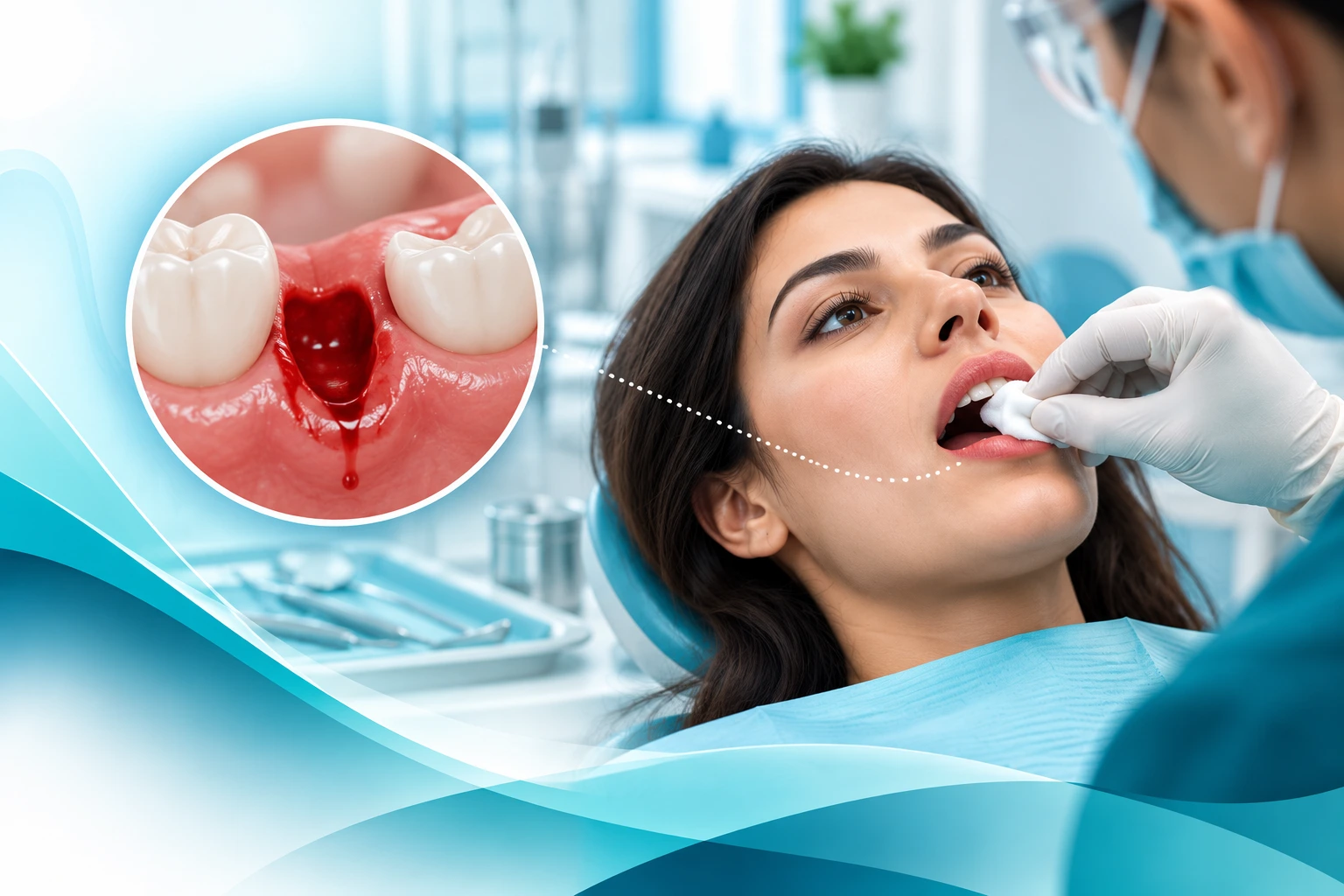
After a tooth extraction, mild bleeding or blood-stained saliva is common during the early healing period. To stop bleeding after tooth extraction, sit upright and bite firmly on clean, slightly damp gauze placed over the extraction site for 20 minutes without repeatedly checking it. If heavy bleeding continues, contact your dentist urgently.
Key Takeaways
- Mild oozing and pink saliva can occur after tooth removal.
- Apply continuous pressure with clean, slightly damp gauze for 20 minutes.
- Avoid spitting, vigorous rinsing, smoking, and strenuous activity during early recovery.
- Protect the blood clot because it helps the extraction site heal.
- Persistent or heavy bleeding requires prompt dental assessment.
- Contact your dentist if bleeding returns or does not respond to firm pressure.
Is Bleeding Normal After Tooth Extraction?
Yes, some bleeding after tooth extraction is normal. The dentist removes the tooth from its socket, leaving a small wound in the gum. A blood clot forms at the site and helps protect the underlying tissue while healing begins.
You may notice a small amount of blood mixed with saliva during the first 24 hours. This can make your saliva appear pink or reddish, even when there is no significant active bleeding.
However, continuous fresh bleeding, blood that repeatedly fills your mouth, or bleeding that does not stop with pressure should not be ignored. Follow the instructions given by your dentist and seek professional advice when necessary.
How to Stop Bleeding After Tooth Extraction at Home
If you experience bleeding after a dental extraction, follow these practical steps while arranging professional care if needed.
1. Apply Firm Pressure With Clean Gauze
Place a clean, slightly damp gauze pad directly over the extraction socket. Bite down firmly and maintain continuous pressure for 20 minutes.
For additional guidance, read these post-operative instructions after tooth extraction.
Avoid lifting the gauze every few minutes to check whether the bleeding has stopped. Repeatedly disturbing the area can interfere with clot formation. If bleeding continues, repeat the pressure once and contact your dentist if it remains uncontrolled.
2. Sit Upright and Keep Your Head Elevated
Remain seated rather than lying completely flat while managing active bleeding. Keep your head elevated when resting or sleeping, using extra pillows if comfortable.
Rest also helps you avoid unnecessary physical exertion during the initial recovery period.
3. Avoid Spitting and Vigorous Rinsing
Spitting forcefully or rinsing your mouth vigorously can disturb the blood clot and cause bleeding to restart.
During the first 24 hours, generally avoid rinsing unless your dentist specifically instructs you otherwise. After that period, follow your dentist’s instructions for gentle oral cleaning.
4. Avoid Smoking and Strenuous Activity
Smoking and vaping can interfere with healing and increase the risk of complications. Exercise, heavy lifting, and other strenuous activities may also encourage bleeding to restart.
Rest during the initial recovery period and follow your dentist’s instructions about when you can safely resume normal activities.
5. Choose Soft Foods and Avoid Hot Drinks
Choose soft foods that are easy to chew, and avoid very hot food or drinks while the extraction site is healing.
Do not chew directly over the affected area. Avoid hard or crunchy foods that could injure the gum or disturb the clot.
6. Protect the Blood Clot
The blood clot is an important part of the healing process. Avoid touching the socket with your fingers, tongue, toothbrush, or other objects.
Brush your other teeth carefully while avoiding direct trauma to the extraction site. Follow your dentist’s instructions about when to begin rinsing and how to clean the area.
7. Follow Your Dentist’s Medication Instructions
Take prescribed medicines as directed. If you use blood thinners or antiplatelet medicines, tell your dentist because these can affect bleeding.
Do not stop prescribed blood-thinning medication without advice from the clinician who manages it. Ask your dentist or pharmacist before taking additional medication, particularly if you have been told to avoid certain painkillers.
How Long Does Bleeding Last After Tooth Extraction?
Bleeding usually decreases soon after the extraction, although mild oozing or blood-stained saliva may continue during the first 24 hours.
The duration can vary depending on the complexity of the extraction, the condition of the gums, existing medical conditions, and medications.
If fresh bleeding continues despite firm pressure, becomes heavy, or returns repeatedly, contact your dentist rather than assuming it is part of normal healing.
Why Is My Tooth Extraction Site Still Bleeding?
Several factors may explain continued bleeding after tooth removal.
The Blood Clot Has Been Disturbed
Spitting, vigorous rinsing, smoking, or touching the socket can disrupt the clot and cause fresh bleeding.
The Extraction Was Complex
Surgical extraction or removal of an impacted wisdom tooth may involve more tissue manipulation than a simple extraction. The recovery process can therefore differ between patients.
Medication or an Underlying Condition
Blood-thinning medication and certain bleeding disorders can contribute to prolonged bleeding. Your dentist needs to know about your medical history and current medications.
The Wound Needs Professional Assessment
Sometimes bleeding requires additional dental treatment to identify its source and control it. Do not attempt to pack the socket with household materials or apply unprescribed substances.
When Should You See a Dentist for Bleeding After Tooth Extraction?
Contact your dentist urgently if bleeding remains uncontrolled after repeated firm pressure, becomes heavy, or starts again after initially stopping.
Seek emergency medical care if you experience difficulty breathing or swallowing, fainting, or signs of substantial blood loss.
You should also seek dental advice if you develop worsening pain, increasing swelling, fever, or a persistent bad taste or smell. These symptoms may indicate a complication that requires examination.
How to Care for Your Gums After Tooth Extraction
Good tooth extraction aftercare supports healing and helps reduce the risk of complications.
- Follow the written instructions provided by your dentist.
- Rest and avoid strenuous activity during the initial recovery period.
- Eat soft foods and avoid very hot food or drinks.
- Do not smoke or vape while the wound is healing.
- Avoid disturbing the clot or repeatedly touching the socket.
- Resume gentle cleaning according to your dentist’s instructions.
- Attend any recommended follow-up appointment.
If you have concerns about your recovery, ask your dentist for advice tailored to your procedure and medical history.
You can also review these care instructions after dental extraction for additional guidance on looking after the extraction site.
Dental Care at Dr. M’s Dental Care in DHA Karachi
If you are concerned about bleeding after tooth extraction, a dental professional can assess the extraction site, identify possible causes, and recommend appropriate treatment.
(Dr. M’s Dental Care) provides dental services in DHA, Karachi, including simple and surgical tooth extractions. If bleeding continues or you are concerned about your recovery, contact the clinic to discuss your symptoms and whether you need an appointment.
Visit the Dr. M’s Dental Care website or explore the clinic’s dental treatments to learn more about available services.
You can also contact the clinic at 0336-2224248 or 021-37442516 to ask about arranging an appointment.
Experiencing Bleeding After Tooth Extraction?
Persistent or heavy bleeding should not be ignored. Contact Dr. M’s Dental Care in DHA, Karachi, for professional dental guidance and an appointment.
Dr. M’s Dental Care · DHA Phase 8, Karachi
Final Thoughts
Knowing how to stop bleeding after tooth extraction can help you manage mild bleeding safely while your gums begin to heal. Apply firm, continuous pressure with clean gauze, avoid disturbing the blood clot, and follow your dentist’s aftercare instructions.
Do not ignore persistent or heavy bleeding. Prompt professional assessment can help identify the cause and ensure that you receive the appropriate care.
Frequently Asked Questions
Place clean, slightly damp gauze over the extraction socket and bite down firmly for 20 minutes without repeatedly checking the site. Sit upright and remain calm. If bleeding continues after repeating pressure once, contact your dentist urgently.
Active bleeding generally decreases soon after the procedure, although slight oozing or blood-stained saliva may occur during the first 24 hours. Persistent fresh bleeding, particularly when pressure does not control it, needs professional dental advice.
A small amount of blood in your saliva is common after tooth removal. However, heavy bleeding, continuous fresh blood, or bleeding that does not respond to firm pressure is not something to ignore. Contact your dentist if you are concerned.
Apply firm, continuous pressure using clean, slightly damp gauze for 20 minutes. If necessary, repeat once. If the bleeding remains uncontrolled, seek urgent dental care. Do not stop prescribed blood-thinning medication without medical advice.
Do not go to sleep while significant active bleeding remains uncontrolled. Apply pressure as instructed and seek dental advice if bleeding continues. Once bleeding is controlled, rest with your head elevated and follow the aftercare instructions provided by your dentist.
The same basic approach applies: place clean, slightly damp gauze over the extraction site and maintain firm pressure for 20 minutes. Avoid spitting, smoking, and vigorous rinsing. Contact your dentist if bleeding continues or becomes heavy.
Avoid vigorous rinsing during the first 24 hours because it may disturb the blood clot. After this period, follow your dentist’s instructions for gentle rinsing and oral hygiene. If the area starts bleeding again, contact your dentist if pressure does not control it.
Seek urgent dental assessment if heavy bleeding persists despite firm pressure or repeatedly returns. Difficulty breathing or swallowing, fainting, or signs of significant blood loss require emergency medical attention rather than waiting for a routine dental appointment.