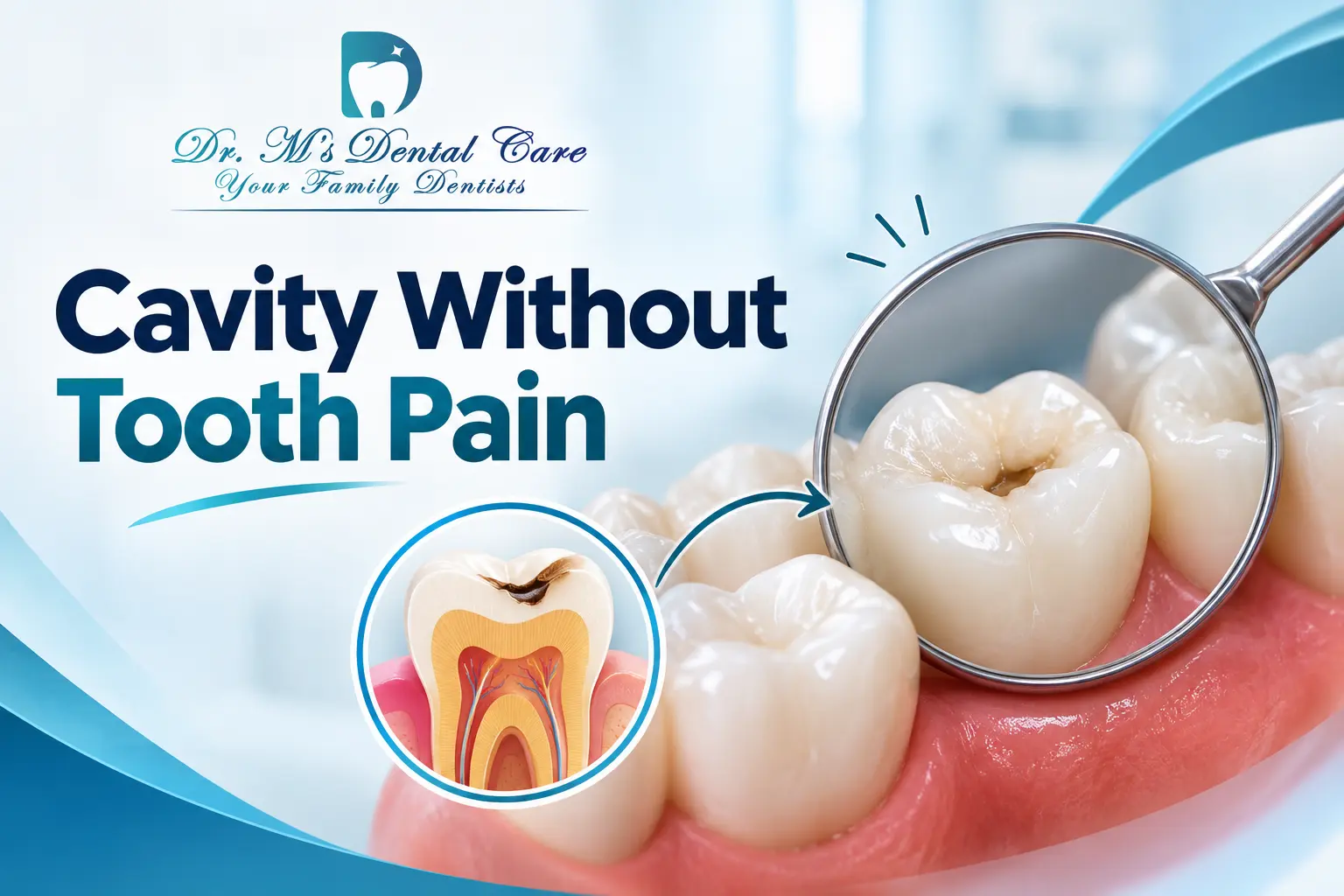
Yes, you can have a cavity without experiencing tooth pain. Early tooth decay often develops without noticeable symptoms, which means you may have a dental cavity without realizing it. Regular dental checkups help identify hidden cavities early, allowing dentists to recommend appropriate treatment before the decay becomes more serious.
Key Takeaways
- A cavity can develop without causing toothache or discomfort.
- Early tooth decay may appear as white spots or changes in tooth enamel.
- Hidden cavities can develop between teeth or in areas that are difficult to clean.
- Dentists can detect cavities through clinical examinations and dental X-rays when needed.
- Early detection may help prevent more extensive dental treatment.
- Untreated tooth decay can eventually cause pain, infection, and damage to the tooth.
Can You Have a Cavity Without Tooth Pain?
Yes, a cavity can develop without causing any pain, especially during its early stages. Tooth decay begins when acids produced by bacteria in dental plaque gradually damage the enamel, which is the protective outer layer of your teeth.
At first, this damage may not affect the inner parts of the tooth responsible for sensation. As a result, you might have a painless tooth cavity without noticing any obvious symptoms.
However, as decay progresses deeper into the tooth, you may experience sensitivity to hot, cold, or sweet foods and drinks. If the damage reaches the dental pulp, it can cause significant pain and infection.
This is why the absence of toothache does not necessarily mean your teeth are healthy.
What Causes a Cavity Without Pain?
A painless cavity develops through the same decay process as other dental cavities. The difference is that early damage may not produce noticeable discomfort.
Here are some common factors that contribute to tooth decay:
1. Plaque Buildup on Teeth
Dental plaque is a sticky layer of bacteria that constantly forms on your teeth. When bacteria interact with sugars from food and drinks, they produce acids that attack tooth enamel.
Over time, repeated acid exposure can weaken the enamel and lead to cavities.
2. Frequent Consumption of Sugary Foods
Regularly consuming sugary snacks, sweets, chocolates, and soft drinks can increase your risk of tooth decay.
Frequent snacking exposes your teeth to repeated acid attacks, making it harder for saliva to restore lost minerals.
3. Inadequate Oral Hygiene
Not brushing regularly or failing to clean between your teeth can allow plaque to accumulate.
Consequently, bacteria may continue damaging areas of your teeth that are difficult to reach with a toothbrush.
4. Hidden Decay Between Teeth
Some cavities develop in the spaces between neighbouring teeth. These areas can be difficult to inspect and clean properly.
As a result, hidden tooth cavities may remain unnoticed until a dental examination or X-ray reveals the problem.
What Are the Early Signs of Tooth Decay?
Although early tooth decay may not cause pain, certain changes can indicate that something is happening to your teeth. Learn more about the early signs of tooth decay and how cavities develop.
Look out for these possible signs:
White Spots on Tooth Enamel
White or chalky-looking spots may indicate early mineral loss from the enamel. They can appear before a visible hole develops in the tooth.
Brown or Black Marks
Discoloured areas may be associated with tooth decay. However, not every dark spot is a cavity, so a dentist should examine it before you draw conclusions.
Food Getting Stuck Between Teeth
If food frequently becomes trapped in the same area, there may be a gap, damaged filling, or other dental issue that needs assessment.
Sensitivity to Sweet or Cold Foods
Sensitivity when consuming cold drinks, sweets, or hot foods can sometimes indicate developing tooth decay.
These signs do not confirm a cavity on their own. A professional dental examination is needed to determine the cause.
How Do Dentists Detect Hidden Tooth Cavities?
You do not need to experience tooth pain for a dentist to identify dental caries. Dentists use clinical examinations and, when appropriate, dental imaging to check for signs of decay.
1. Visual Dental Examination
A dentist examines your teeth for white spots, discolouration, visible holes, and other changes that may indicate tooth decay.
2. Checking the Tooth Surface
During an examination, the dentist may assess suspicious areas of the tooth using appropriate dental instruments.
3. Dental X-rays
Some cavities, particularly those developing between teeth, may not be visible during a routine visual examination.
When clinically indicated, dental X-rays can help identify hidden decay and determine how far it has progressed.
4. Assessing the Extent of Decay
After identifying a suspicious area, the dentist determines whether the enamel is affected, whether a cavity has formed, and which treatment is appropriate.
What Happens If You Leave a Painless Cavity Untreated?
Ignoring a cavity simply because it does not hurt can allow the decay to progress. Depending on its severity, untreated tooth decay may lead to several complications. Learn more about the symptoms and treatment of tooth decay.
Enamel Damage
In the early stages, minerals are lost from the outer tooth surface. Some early lesions can be managed with fluoride and other preventive measures under dental guidance.
Dentin Damage
If decay progresses beyond the enamel, it can reach the dentin, the softer layer underneath. At this stage, the tooth may become more sensitive.
Dental Pulp Infection
Advanced decay can reach the pulp, which contains nerves and blood vessels. This may result in severe toothache and infection.
Dental Abscess
If an infection develops, pus may collect around the tooth or surrounding tissues. Swelling, severe pain, and fever can occur and require urgent dental assessment.
Important: Seek urgent dental care if you experience facial swelling, fever, difficulty swallowing, or difficulty breathing. Breathing or swallowing difficulties require emergency medical attention.
How Is a Painless Tooth Cavity Treated?
Treatment depends on how far the tooth decay has progressed. Not every early lesion requires a filling, and not every cavity needs the same treatment. Depending on the condition of your tooth, your dentist may recommend tooth filling treatment to restore the damaged area and prevent further decay.
Fluoride Treatment
If decay is detected at an early stage before a hole forms, a dentist may recommend fluoride treatment to help support enamel remineralisation.
Tooth-Coloured Dental Fillings
When a cavity has formed, the dentist may remove the decayed portion of the tooth and restore the area with a suitable filling material.
Tooth-coloured fillings can restore the tooth while maintaining a natural-looking appearance.
Root Canal Treatment
If decay reaches the dental pulp and causes infection or irreversible damage, root canal treatment may be necessary to save the affected tooth.
Dental Crown
When a tooth has lost significant structure, a dental crown may be recommended to restore its strength and function.
The appropriate treatment depends on a professional assessment of the tooth.
How Can You Prevent Hidden Tooth Cavities?
Good oral hygiene habits can help reduce the risk of tooth decay and protect your teeth.
Here are some practical steps:
- Brush your teeth twice daily using fluoride toothpaste.
- Clean between your teeth every day with dental floss or interdental brushes.
- Reduce frequent consumption of sugary foods and drinks.
- Drink water regularly throughout the day.
- Avoid ignoring unusual changes in your teeth.
- Visit your dentist for regular examinations.
- Follow your dentist’s advice regarding preventive fluoride treatments.
Remember, good oral hygiene helps prevent cavities, but it cannot replace professional dental examinations.
When Should You Visit a Dentist?
You should arrange a dental examination if you notice white spots, dark marks, unusual sensitivity, or food repeatedly getting trapped between your teeth.
Even if you do not experience discomfort, regular checkups can help identify dental problems before they become more complicated.
If you live in Karachi, Dr. M’s Dental Care offers general and restorative dental services, including tooth-coloured fillings and root canal treatment.
A professional assessment can help determine whether you have early tooth decay and what treatment, if any, is required.
Related Dental Articles
Want to learn more about dental health and available treatments? Explore these helpful guides from Dr. M’s Dental Care:
- How to Stop Bleeding After Tooth Extraction
- Best Wisdom Tooth Removal in Karachi
- Best Gum Surgery in Karachi
Don’t Wait for a Toothache to Check Your Teeth!
Tooth decay can develop without noticeable pain. Get your teeth checked by a dental professional and take the right steps towards a healthier smile.
Book Your Dental CheckupDr. M’s Dental Care | DHA Phase 8, Karachi
Final Thoughts
A cavity does not always come with a warning sign. You may have tooth decay even when your teeth feel completely normal.
The best way to protect your oral health is to maintain good dental hygiene and avoid delaying routine dental checkups. Early identification can help prevent minor enamel damage from developing into more serious dental problems.
If you suspect a hidden cavity or have not had a dental examination recently, consider booking an appointment with a qualified dentist.
Frequently Asked Questions
Yes. Early tooth decay often develops without causing noticeable pain. This happens because the damage may initially remain within the enamel and not affect the inner parts of the tooth.
Look for possible signs such as white spots, brown or black marks, food getting trapped between teeth, or sensitivity to sweet and cold foods. However, a dental examination is needed to confirm whether decay is present.
Yes. Dentists can identify cavities during routine dental examinations, even when patients have no symptoms. Dental X-rays may also be recommended to detect decay in areas that are difficult to examine visually.
Some early enamel lesions can be managed or reversed through remineralisation, fluoride treatments, and improved oral hygiene. However, once a physical cavity has formed, it generally requires restorative treatment.
Untreated decay can gradually spread deeper into the tooth. It may eventually cause sensitivity, toothache, pulp infection, dental abscesses, and potentially tooth loss.
No. Early enamel changes without a formed cavity may sometimes be managed with preventive treatments and monitoring. However, when a physical cavity develops, a filling is commonly recommended.
Dental checkup frequency depends on your oral health and individual risk factors. Your dentist can recommend an appropriate schedule based on your condition and history.
You can visit Dr. M’s Dental Care in DHA Phase 8, Karachi, for a professional dental assessment. The dentist can examine your teeth and recommend appropriate treatment based on the findings.