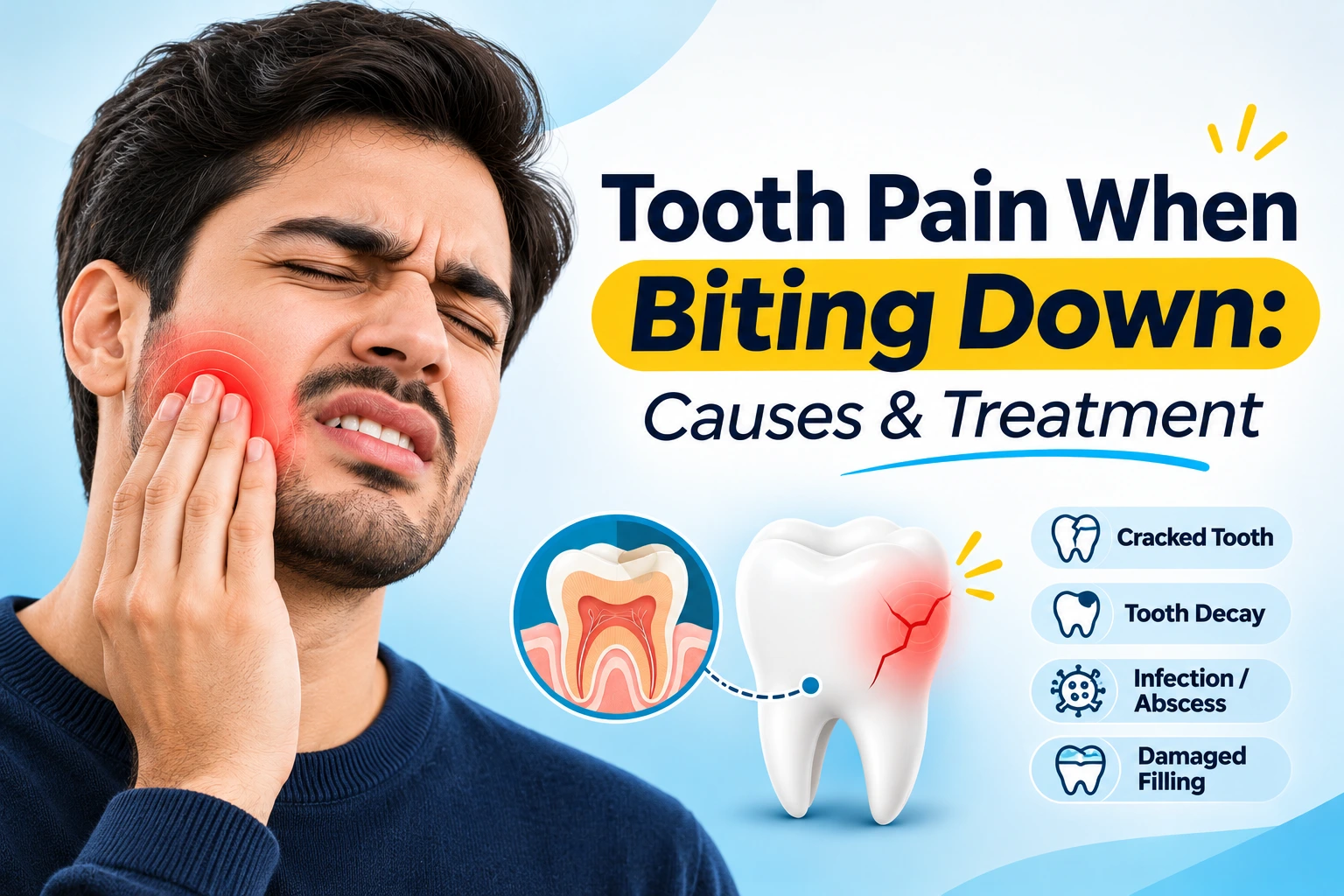
Tooth pain when biting down can happen because of a cracked tooth, dental decay, a damaged filling, inflammation inside the tooth, or an infection around its root. The discomfort may feel sharp, dull or pressure-like. Identifying the cause early helps a dentist recommend the right treatment and protect your natural tooth.
Key Takeaways
- Pain while biting or chewing can have several dental causes.
- A cracked tooth may cause sharp or intermittent pain when pressure is applied.
- Cavities, loose fillings and dental infections can also make chewing uncomfortable.
- Avoid chewing hard foods on the painful side until the tooth is examined.
- Persistent or worsening pain should be assessed by a dentist.
- Treatment depends on the underlying problem and may include a filling, crown or root canal.
Why Does My Tooth Hurt When I Bite Down?
A tooth may hurt when you bite down because pressure is affecting a damaged or sensitive part of the tooth. This can happen when the enamel or inner tooth structure is compromised, a filling becomes loose, or inflammation develops around the root.
Sometimes the pain appears only when chewing food. In other cases, you may notice discomfort when releasing your bite, eating something hard or putting pressure on a particular tooth.
The exact cause cannot be confirmed from symptoms alone. A dental examination helps identify the affected tooth and determine whether treatment is needed.
7 Common Causes of Tooth Pain When Biting Down
1. Cracked or Fractured Tooth
If you experience repeated tooth pain while biting, read our guide on Signs You Need to Visit a Dentist to understand when professional dental care is important.
Common symptoms may include:
- Sharp pain when biting or chewing.
- Pain that comes and goes.
- Discomfort when releasing biting pressure.
- Sensitivity to hot or cold foods and drinks.
A dentist may examine the tooth and recommend appropriate treatment based on the location and extent of the crack. Depending on the damage, treatment may involve a filling, crown or root canal treatment.
2. Tooth Decay or a Deep Cavity
To understand how tooth decay can develop without obvious symptoms, read our guide on Can You Have a Cavity Without Tooth Pain?.
You may experience:
- Tooth pain while eating.
- Sensitivity to sweet, cold or hot foods.
- Discomfort when chewing.
- A visible hole or dark area in the tooth.
A small cavity may be treated with a dental filling. More advanced decay may require additional treatment, including root canal treatment if the pulp becomes irreversibly damaged.
3. Damaged or Loose Dental Filling
If you have previously received a dental filling, pain when biting may indicate that the restoration has become damaged, loose or needs adjustment.
Possible signs include:
- Pain when putting pressure on the filled tooth.
- Sensitivity when chewing.
- A rough or uneven feeling when biting.
- Food collecting around the restored area.
A dentist can check the filling and surrounding tooth structure. Treatment may involve adjusting or replacing the filling, depending on the findings.
4. Tooth Infection or Dental Abscess
If you notice persistent tooth pain, swollen gums or other warning signs of a dental infection, read our guide on Signs You Need to Visit a Dentist to understand when to seek professional dental care.
Possible symptoms include:
- Persistent or throbbing toothache.
- Pain when chewing.
- Swollen or tender gums.
- A bad taste in the mouth.
- Facial or jaw swelling.
- Fever in some cases.
A dental abscess requires prompt professional assessment. Treatment may involve draining the infection and treating its source, which can include root canal treatment or extraction when the tooth cannot be saved.
5. Inflammation Inside the Tooth
The pulp is the soft tissue inside a tooth containing nerves and blood vessels. Deep decay, cracks or dental trauma can cause inflammation in this area.
You may experience:
- Pain when biting down.
- Lingering sensitivity to hot or cold.
- Spontaneous toothache.
- Pain that becomes more frequent or severe.
If the pulp is irreversibly damaged, a dentist may recommend root canal treatment to remove the affected tissue and preserve the remaining tooth structure.
6. Tooth Sensitivity When Chewing
Tooth sensitivity can occur when the protective enamel wears down or the roots become exposed due to gum recession. Pressure, cold foods and certain textures may trigger discomfort.
Sensitivity may be linked to several conditions, including enamel wear, exposed dentin, decay or other dental problems. A dental examination helps identify the actual cause rather than treating sensitivity alone.
7. Dental Trauma or Excessive Bite Pressure
An injury, accidental impact or excessive pressure from clenching and grinding may affect a tooth or the surrounding structures.
If your teeth do not meet comfortably when you bite, a dentist may also need to evaluate your bite alignment and any recent dental restoration.
Do not try to adjust a filling or change your bite yourself. The dentist should first identify the source of the discomfort.
Why Does My Tooth Hurt When I Bite Down but Not Otherwise?
If you experience recurring pain when biting or chewing, read our guide on Cracked Tooth Symptoms to learn about common dental warning signs and when to seek professional care.
Possible causes include:
- A small crack in the tooth.
- A loose or damaged filling.
- Early dental decay.
- Inflammation around the tooth root.
- An uneven bite or excessive pressure on one tooth.
Cracked teeth can produce intermittent pain during chewing, and the discomfort may not be present all the time. However, this symptom does not confirm that a tooth is cracked.
If the same tooth repeatedly hurts when you bite, arrange a dental examination instead of waiting for the pain to become constant.
How Is Tooth Pain When Biting Down Diagnosed?
A dentist needs to identify the cause before recommending treatment. Depending on your symptoms, the examination may include the following:
Dental Examination
The dentist checks the affected tooth, surrounding gums and visible tooth structure for decay, cracks, swelling or damaged restorations.
Bite and Pressure Assessment
The dentist may ask you to bite gently on a specific area or use appropriate clinical tests to identify which tooth is causing discomfort.
Dental X-rays
X-rays may help assess decay, the roots and surrounding bone. However, some small cracks may not be visible on a standard dental X-ray, so additional clinical assessment may be necessary.
Pulp Sensitivity Tests
When appropriate, the dentist may check how the tooth responds to temperature or other tests to assess the condition of its inner tissues.
The diagnosis depends on the combination of examination findings, symptoms and any necessary imaging.
What Is the Treatment for Tooth Pain When Biting Down?
The treatment depends on what is causing the pain and how much of the tooth is affected.
Dental Filling
If the problem is a cavity or a small area of tooth damage, a filling may restore the affected structure.
Dental Crown
A crown may be recommended when a tooth needs additional protection and support, such as in certain cases of a cracked or significantly weakened tooth.
Root Canal Treatment
If the pulp inside the tooth is irreversibly inflamed or infected, root canal treatment may be recommended. It involves removing the affected pulp, cleaning and sealing the root canal system, and restoring the tooth.
Filling Replacement or Bite Adjustment
If a filling is damaged or a restoration is affecting the way your teeth meet, the dentist may recommend replacing or adjusting it after examination.
Tooth Extraction
If the tooth is too damaged to be restored, extraction may be necessary. The dentist will assess whether the natural tooth can be saved before recommending removal.
There is no single treatment for every case of tooth pain when chewing. The right option depends on the diagnosis.
What Can You Do at Home Until You See a Dentist?
For more information, read the American Dental Association’s guidance on antibiotics for dental pain and swelling, which explains when antibiotics may or may not be needed.
- Avoid chewing hard, crunchy or sticky foods on the affected side.
- Choose softer foods that do not require much chewing.
- Keep brushing gently with a soft-bristled toothbrush.
- Clean between your teeth carefully to remove trapped food.
- Avoid extremely hot or cold foods if they trigger sensitivity.
- If you normally can take them safely, use an over-the-counter pain reliever according to its label or a pharmacist’s advice.
Important: These steps do not repair a cracked tooth, treat an abscess or remove the underlying cause. Do not put aspirin directly on the tooth or gums, and do not take antibiotics without a dentist’s or doctor’s prescription.
When Should You See a Dentist for Tooth Pain When Chewing?
According to the Mayo Clinic’s guide to dental abscess symptoms and causes, facial swelling, fever and difficulty swallowing can be signs of a serious dental infection that requires prompt medical attention.
Get Professional Dental Care at Dr. M’s Dental Care
If you are experiencing tooth pain when biting down, a professional dental examination can help identify the reason behind your discomfort.
Dr. M’s Dental Care is located in DHA Phase 8, Karachi. The clinic lists root canal treatment and crowns and bridges among its dental services. Dr. Masood is identified on the clinic website as an Endodontist and Restorative Specialist.
The dental team can assess your symptoms and discuss an appropriate treatment plan based on your dental condition.
If you are experiencing persistent tooth pain or discomfort while chewing, contact the clinic to arrange an appointment.
Book your dental consultation: Contact Dr. M’s Dental Care
Experiencing Tooth Pain When Biting?
Don’t ignore persistent tooth pain. Get your teeth examined by a dental professional and find the right treatment for your smile.
Book Your Dental Consultation → Dr. M’s Dental Care | DHA Phase 8, KarachiFinal Thoughts
Tooth pain when biting down should not be ignored, even if it only happens occasionally. Cracks, cavities, damaged fillings and infections can all cause discomfort during chewing, and each requires a different approach to treatment.
Rather than guessing the cause or relying only on temporary pain relief, arrange a dental examination to understand what is happening and protect your oral health.
Frequently Asked Questions
Tooth pain when biting down may be caused by a cracked tooth, dental decay, a damaged filling, inflammation inside the tooth or an infection around its root. A dentist can examine the affected area to determine the cause.
Pain that appears only while chewing may be related to a crack, damaged filling, cavity or pressure around the tooth root. These problems may become noticeable when pressure is applied, even if the tooth feels normal at rest.
Yes. A cracked tooth can cause sharp or intermittent pain when chewing or releasing biting pressure. Small cracks may be difficult to see, so a dental examination is important when you repeatedly experience these symptoms.
Yes. A cavity that progresses into deeper tooth structures may cause discomfort when chewing or biting. The treatment depends on how far the decay has progressed and whether the inner pulp has been affected.
Discomfort after a filling can have several causes, including temporary sensitivity, an uneven bite or a problem with the restoration or underlying tooth. If pain persists, worsens or affects chewing, contact your dentist for an assessment.
Avoid chewing on the painful side, choose softer foods and maintain gentle oral hygiene until you can see a dentist. These steps may reduce discomfort temporarily, but professional treatment is needed to address the underlying cause.
Yes. An infection around the tooth root may cause pain when chewing, tenderness, swollen gums or persistent toothache. Facial swelling, fever or difficulty swallowing requires urgent professional assessment.